
Sign up for dispatches from our public workshop
We Brought Pink Pigeon Stickers to NICAR. Here's Why.
To survive extinction, the pink pigeon just needed space to be itself. This year's NICAR felt like that.
March 18, 2026 · Tory Lysik · Edited by Ash Ngu, David Eads
Leer en español →If you were in Indianapolis for the National Institute of Computer Assisted Reporters (NICAR) conference at the beginning of March and checked out the free stuff table, you might have seen a pink pigeon sticker with a green background on the table. That was us!
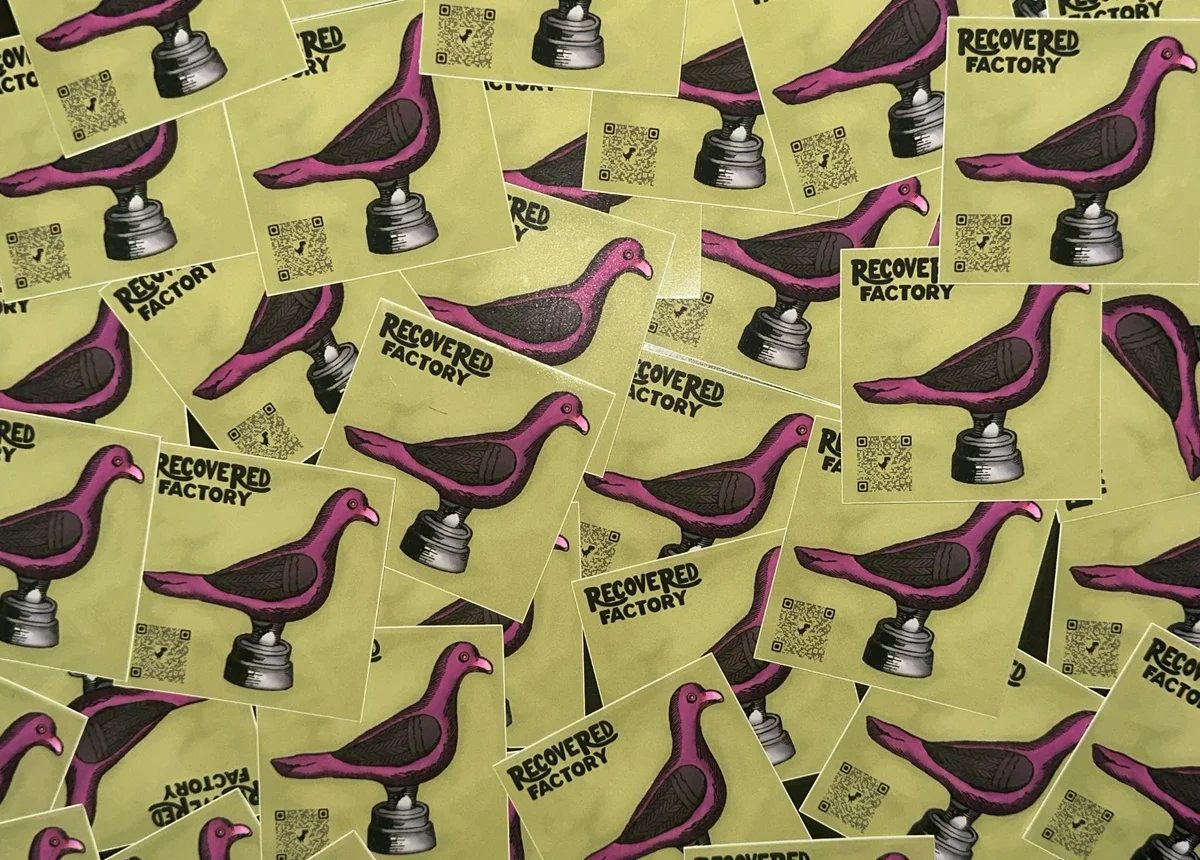
NICAR was brilliant as usual. The amount of AI sessions was wild — a few years ago, there were very few. Now, the majority of them were about how journalists can use AI for good, while still reporting on it and what matters. And that shift is significant. This wasn’t a room full of people panicking about how AI might take from journalism — it was a room full of people actively shaping what journalism does with it. Data reporters, who have always been ahead of the curve on using new tools without losing sight of the story, are once again leading the way. If you were looking for a reason to feel hopeful about where this industry is headed, Indianapolis was a pretty good place to find one.
But why pigeon stickers? And why pink? This little pigeon has a great backstory that is a beautiful metaphor for Recovered Factory’s approach to journalism.
As someone who lives in New York City, I see pigeons literally every day, but I’ve always had a fascination with them. As someone who grew up in rural U.S., pigeons give me a reminder of wild nature in this concrete jungle that the small patches of grass, parks, neatly placed trees and rats cannot.
A few weeks ago, I finally made my first trip out to the Bronx Zoo. At the bird sanctuary, I spotted a bird that seemed slightly out of place amongst the neon parakeets, blue macaws and flamingos — it was a rather zany looking pink pigeon. I assumed it had snuck in until I read the information panel and found out it was indeed a pink pigeon — a species of pigeon no New Yorker would ever expect to see.
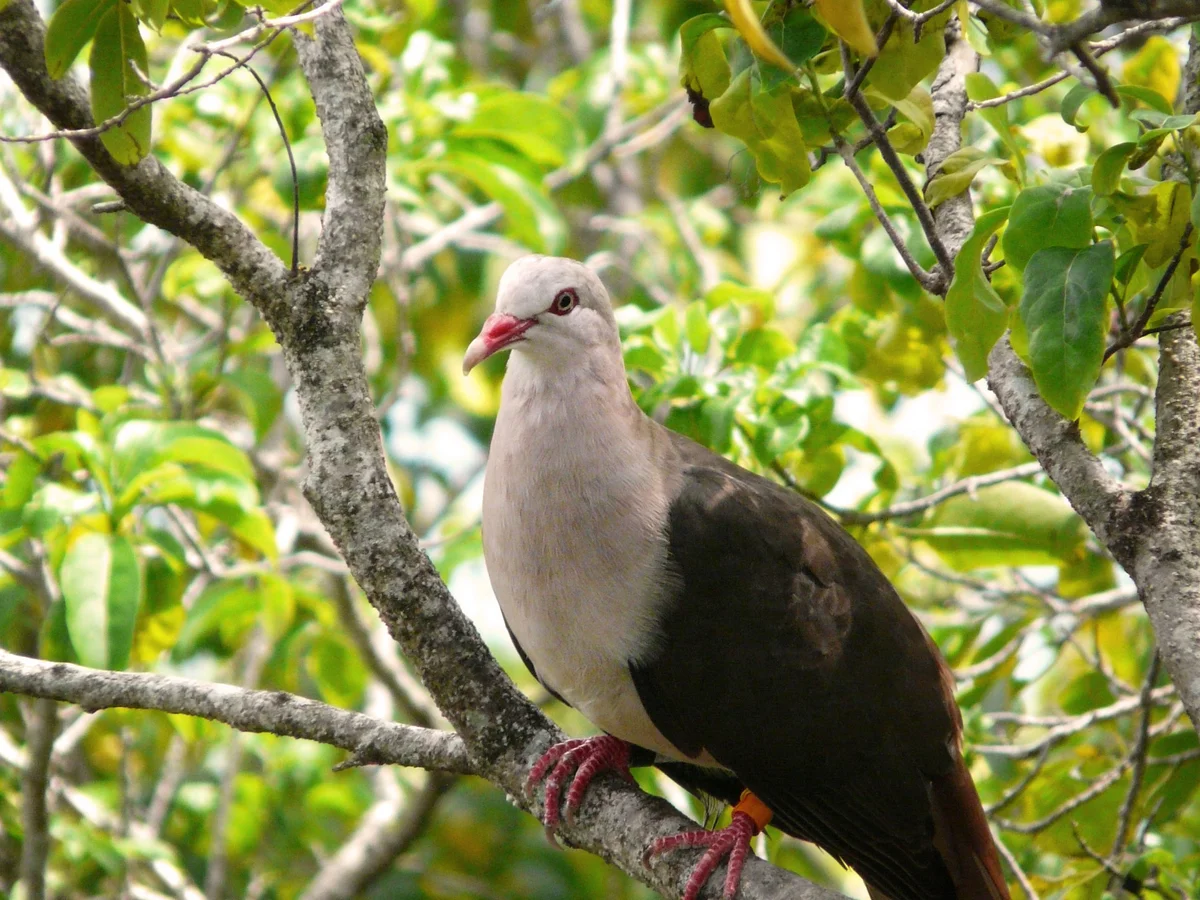
I spent the entire train ride home researching pink pigeons. The wild pink pigeon is only found on the Island of Mauritius off the coast of Madagascar in the Indian Ocean. They are introverted, curious foragers and gentle opportunists. They’re not built for speed or aggression, and definitely aren’t the flashiest thing in the room. Feral cats like house cats tend to attack them a lot. Also bigger rats. They aren’t the fastest animal at getting away. In the early 1970s, the pink pigeon nearly became extinct due to habitat loss and human introduction of invasive predators. By 1990, there were only 9 birds left in the world and less than 2 percent of their native forest habitat left on Mauritius, their native land for thousands of years, compared to a few hundred years ago.
But then — scientists made a plan, and quickly and strategically intervened. By 2010, there were about 400 pink pigeons around the world. And as of last year, there are 400 in the wild alone and upwards of 600 when adding in those housed in at least seven zoos worldwide (that I could find) and scientific conservation programs.
The species still has a long way to go and is, by no means, in the clear. They are still classified as “vulnerable” (they would have to drop below 50 to be “endangered” or “critically endangered” again). But they came back from the brink and have held onto enough genetic diversity to thrive.
This story of persistence has been one that stuck with me — maybe because I was living a small version of it myself. Twenty minutes before giving a 9am demo at NICAR, I found out my water bottle had spilled in my computer’s charging port. My team and I had prepped all well before the conference, so we were okay — but I still had to teach an hour-long demo from memory, without notes or the chance to triple-check my codebase. You figure it out. You stay yourself. You do the thing anyway. You trust your colleagues to cover you if you forget something and they know you’d do the same for them.
The pink pigeon has survived habitat destruction, invasive predators, disease, and a population decline so severe that scientists basically had to perform a miracle to save it. But it didn’t survive by becoming something else. It survived by being stubbornly, relentlessly itself — with help from people who decided it was worth fighting for.
Pink pigeons didn’t cause deforestation. They didn’t invite the rats and the feral cats. The world around them changed — violently, fast, and with zero warning — and they had to figure out how to exist inside that new reality anyway. Journalists themselves are more implicated in our field’s decline — the industry made choices too, ones that are worth reckoning with honestly. But I don’t think hand-wringing about that is where the energy should go right now. The ecosystem looks different than it did. Okay. What are we going to do about it?
The pink pigeon isn’t a perfect metaphor, and I’ll be the first to admit it. But the part I keep returning to is this: the pigeon just needed space to do what it already knew how to do. It didn’t need to become something else. It needed the right conditions and care. Part of that for us is transparency – doing the work in public, showing the process as we go. It’s trust built slowly with an audience that’s actually paying attention. And it’s a willingness to take risks, because that’s the thing that keeps the work from going flat. Just the room to do what we already know how to do and make the world a better place.
Sign up for dispatches from our public workshop