
Sign up for dispatches from our public workshop
Track ICE agreements with 287(g) Watch
Participation in 287(g) has risen dramatically since 2025.
May 28, 2026 · David Eads · Edited by Tory Lysik
Leer en español →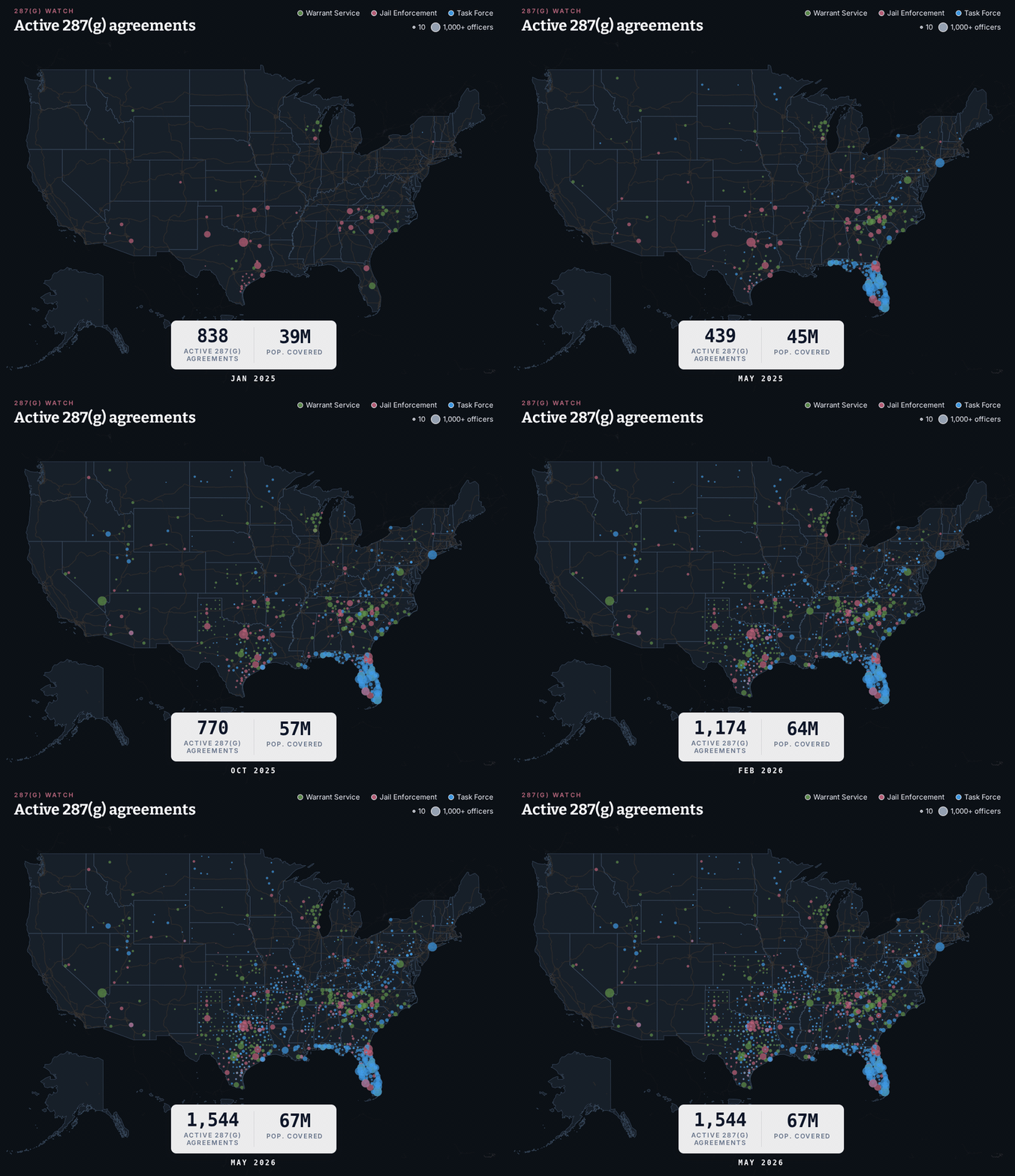
The U.S. federal government has a rapidly growing program that allows participating local law enforcement agencies to enforce federal immigration policy. Now, we’re making participation data easy to access and act on.
287(g) Watch shows you all the agreements nationwide. See them on a map and animated over time and enriched with critical data context. Share them on TikTok, IG, and YouTube. Make records requests to understand how agencies are implementing the agreements.
What is 287(g) and why are we doing this?
Named for the section of law that allows Homeland Security and ICE to deputize local agents, 287(g) agreements have been around since the 1990s. They spread slowly during the Obama administrations then rapidly during the first Trump administration from 2017-2020, and even more since 2025. Originally conceived primarily as a way for law enforcement agencies to target individuals accused of serious crimes in local custody, their implementation has shifted to delegating federal authority to local law enforcement agents.
The agreements often come with federal funding dollars for participating agencies.
The only data ICE regularly publishes on this is a list of active participating agencies that includes a link to the Memorandum of Agreement and honestly not much else. You aren’t going to find outcomes or much in the way of implementation details here. That is why we made this tool.
There are several existing efforts to track the data published by ICE like Elijah Appelson’s “Tracking 287(g)” archiving system. There’s good coverage of the program in newsletters like Andrew Thrasher’s Maxwell Commons and in Austin Kocher’s Substack. And MuckRock recently published a guide to requesting more information about programs like 287(g).
We’re excited to add to that ecosystem. Our tool is built on Tracking 287(g)’s brilliantly reliable archive of ICE participation spreadsheets. It distinguishes itself in several ways:
- Enriching the dataset: For each agency, we’re pulling in the FBI’s Law Enforcement Employment data and public records requests in the Muckrock ecosystem.
- Building for discoverability: It is our express goal to ensure AI-powered search and chat-based research picks up the best, latest data.
- Vertical video and mobile design is the priority: Andrew Thrasher built a detailed dashboard that’s a wonderful, in-depth reference tool. Our tool shows less but is legible on mobile and will be increasingly optimized for vertical video.
- Call-to-action: This data doesn’t tell us much. But it does tell us who we can ask to turn over their records under transparency laws.
We still want to build this out more, with a better AI chatbot integration and detailed summaries of each agency that surface the critical local reporting done on 287(g) and immigration enforcement happening around the country. We’ll be able to build them faster with your financial support.
And a special shoutout to Tory Lysik, whose gumption, strong data work, and excellent design eye made this project happen.
Sign up for dispatches from our public workshop